The short answer
Design out recurring jobs before choosing finishes.
A low-maintenance backyard starts with the tasks you want to reduce. List the mowing, pruning, watering, sweeping, weeding, coating and repair work the current yard creates, then plan surfaces, planting, access, storage and drainage around an acceptable level of upkeep. Low maintenance does not mean covering the property in one material. It means every part of the yard has a useful role and a realistic care plan.
01
Define what low maintenance means for your household
Low maintenance is personal. One household may enjoy gardening but want to stop mowing. Another may prefer a lawn for children and accept mowing if pruning, weeding and surface cleaning are reduced elsewhere. Start by deciding which jobs you are willing to keep and which ones make the backyard difficult to use.
Review maintenance across a full year. Weekly jobs are easy to remember, but seasonal pruning, leaf removal, irrigation checks and periodic surface care can create the larger workload. Your brief should account for both routine tasks and jobs that appear only a few times each year.
- How much time are you willing to spend on the backyard in an ordinary week?
- Which current task is most likely to be postponed?
- Do you want to garden, or do you mainly want planting to soften and shade the space?
- Which areas need to stay suitable for children, pets, entertaining or access?
- Would you rather complete small regular jobs or occasional larger maintenance sessions?
- Who will manage the yard if your needs or mobility change?
02
Audit the jobs the existing backyard creates
Walk through the yard with maintenance in mind rather than appearance alone. Photograph places where weeds establish, leaves collect, edges are difficult to reach, water appears to sit, furniture blocks cleaning or plants have outgrown their position.
Record the cause of each recurring job before deciding on a replacement. A hard-to-mow strip may be a layout problem rather than a reason to remove all lawn. A dirty corner may need better access, fewer traps for debris or investigation of water movement.
| Recurring job | What to observe | Planning response to explore |
|---|---|---|
| Mowing and edging | Small lawn fragments, tight corners, obstacles and narrow strips. | Consolidate useful lawn into a clear shape and reconsider leftover turf. |
| Pruning | Plants blocking paths, windows, fences or each other. | Select plants using mature size and available clearance. |
| Weeding | Bare soil, disturbed edges and difficult-to-reach gaps. | Plan appropriate groundcover, mulch and accessible bed shapes. |
| Sweeping and washing | Leaf traps, exposed entertaining areas and awkward surface junctions. | Review nearby planting, falls, edges and cleaning access. |
| Watering | Plants with different needs grouped together or areas that dry unevenly. | Group plants by site conditions and water needs. |
| Surface care | Areas exposed to traffic, furniture, weather or garden debris. | Compare the full cleaning, care and repair cycle before selecting a finish. |
03
Set a realistic maintenance budget
A maintenance budget is the amount of time, attention and specialist help you are prepared to give the completed yard. It makes the phrase low maintenance measurable and gives the project team something more useful than a request for easy-care materials.
- 01
List the jobs you are prepared to keep
Include mowing, pruning, watering, cleaning, seasonal garden work and periodic surface care.
- 02
Set an acceptable frequency
Decide which jobs can happen weekly, monthly, seasonally or through an occasional specialist visit.
- 03
Protect the activities that matter
Do not remove a useful lawn, garden or entertaining area solely to reduce one task if it supports daily life.
- 04
Test the busiest season
Consider the period when growth, leaves, entertaining and weather exposure create the most work.
- 05
Plan for future access
Make sure plants, drains, lights, fences and surfaces can still be reached for inspection, cleaning or repair.
04
Right-size lawn, planting and hard surfaces
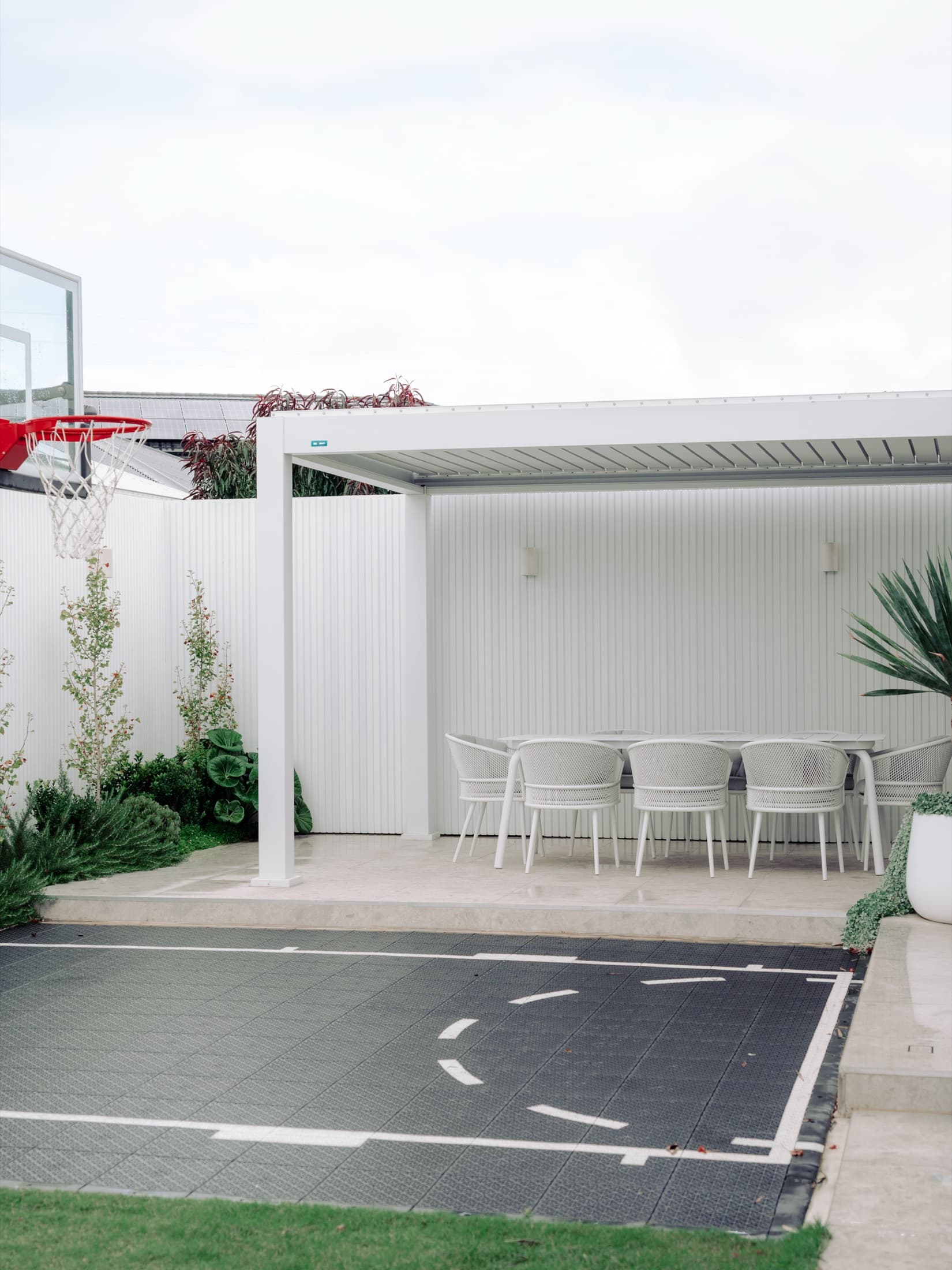
Low maintenance is usually achieved through proportion and layout, not by maximising one surface. Keep lawn where it provides a clear play, circulation or visual function. Use planting where it can soften boundaries, support privacy or improve the outlook from inside. Reserve constructed surfaces for places where people sit, walk or regularly use furniture.
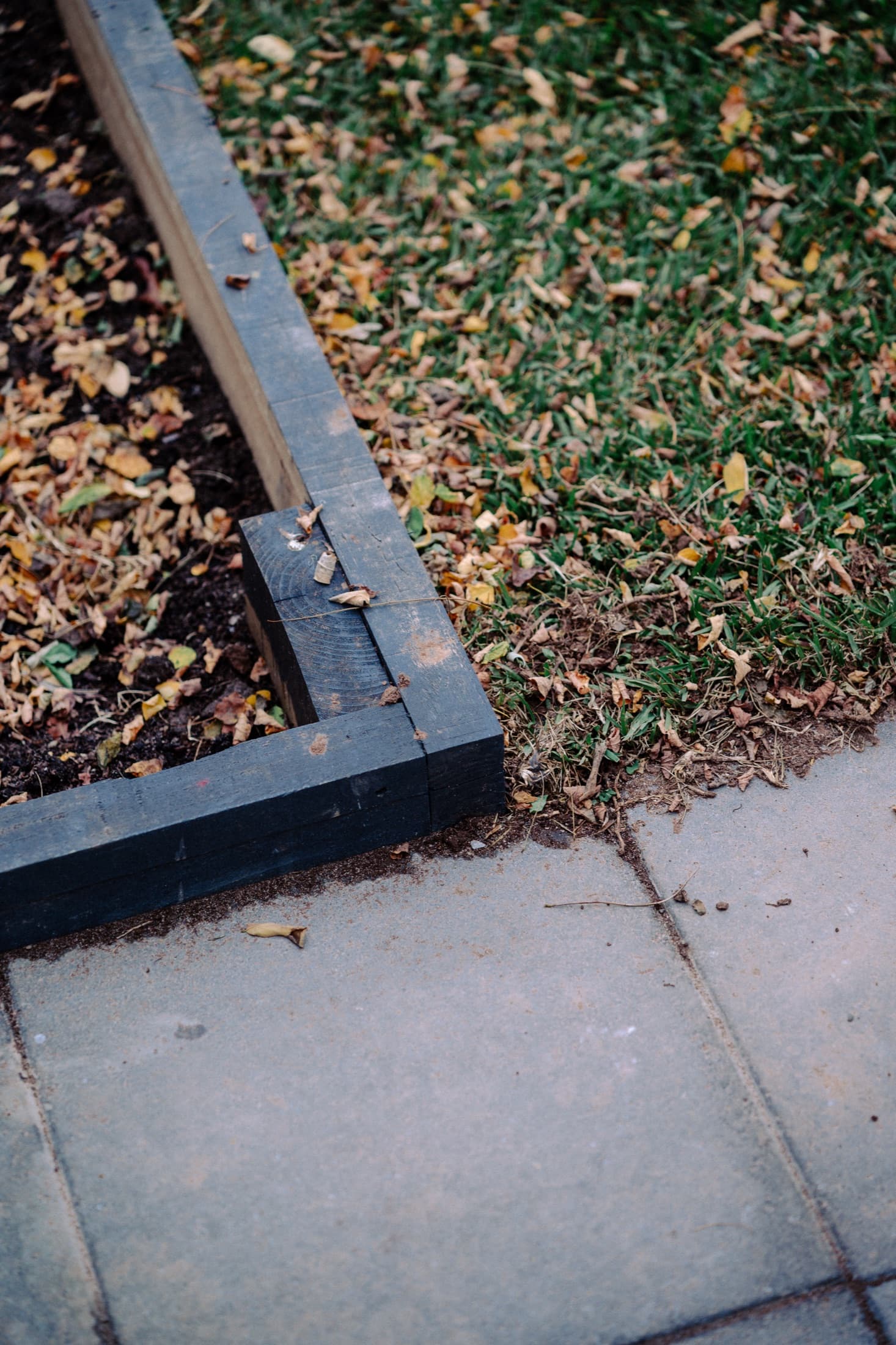
Avoid narrow leftover zones that have no clear purpose. A small strip of lawn that is difficult to mow, an inaccessible garden bed or paving that sits outside every natural route can add work without improving how the yard functions.
Also consider permeability and summer comfort before increasing hard surfaces. Australian Government Your Home guidance recommends limiting paving to the areas where people sit, stand and walk, and using permeable surfaces and planting to help manage water and heat.
05
Choose plants for the site and their mature size
Plant selection should follow the conditions in each part of the yard. Record sun, shade, exposure, soil behaviour and where water appears to collect or drain. Group plants with compatible needs instead of spreading high-care plants throughout the property.
Check mature height and width, not only the size at purchase. A plant that naturally fits its position is less likely to need repeated cutting simply to keep a path, window or fence clear. Allow room to reach boundaries, taps, drains and other elements that may require future attention.
For properties in the City of Casey, the council's Indigenous Plant Guide is a useful local starting point. It identifies plants associated with local plant communities and includes information about size and growing requirements. Plant suitability still needs to be checked for the conditions and purpose of the specific garden.
Planning checklist
- Sun and shade at the time the area will be used.
- Soil and drainage conditions.
- Expected mature height and spread.
- Clearance from paths, windows, fences and services.
- Water needs after establishment.
- Pruning, litter and seasonal care expectations.
- Whether the plant supports privacy, shade, habitat or another clear purpose.
06
Plan water, access and storage as one system
Maintenance becomes harder when the practical route through the yard is overlooked. Make sure a mower, bin, hose, garden tools and replacement materials can reach the areas where they are needed. Provide a sensible place to store the items that would otherwise remain on a deck, path or lawn.
Water movement should be considered before finished levels and surfaces are fixed. Record where water appears after rain and identify questions for an appropriately qualified professional. Do not rely on a decorative surface or planting bed to correct a drainage issue without site-specific assessment.
Keep inspection and cleaning points accessible. Hiding a drain, tap or service behind fixed furniture or dense planting may make the finished view cleaner, but it can make routine care and future repairs more difficult.
07
Compare materials by their complete care cycle
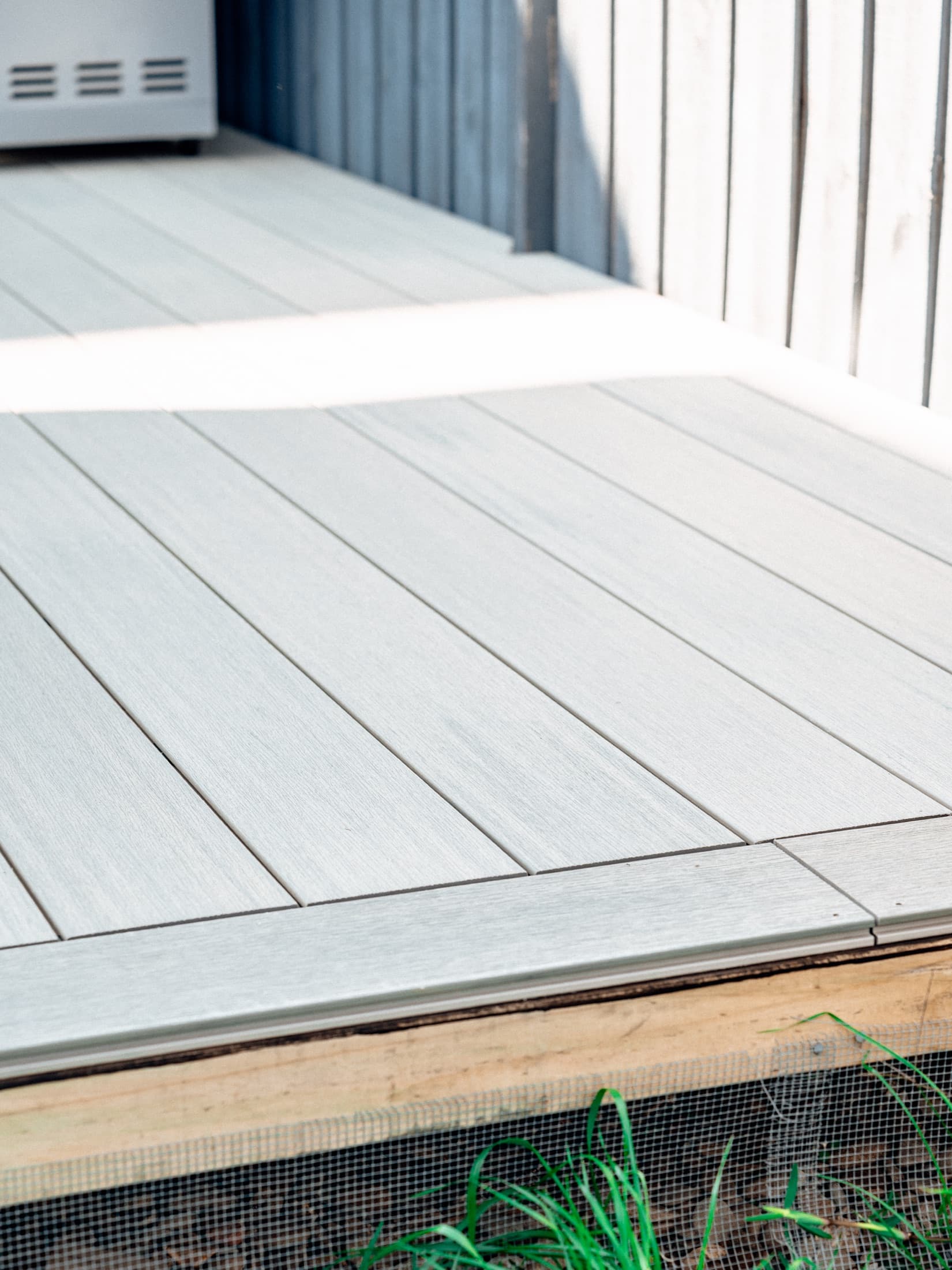
No outdoor material is maintenance-free. Compare options based on how they perform in the proposed location, how they are cleaned, whether periodic treatment may be required, how individual sections can be repaired and what happens when the material reaches the end of its useful life.
Ask for care information that relates to the exact product under consideration. General labels such as natural, composite, sealed or weather-resistant are not enough to establish how a product will perform in a particular exposure.
- What routine cleaning does the manufacturer recommend?
- Could leaves, soil, grease or furniture marks be common in this location?
- Is coating, sealing or another periodic treatment required?
- Can one damaged board, paver or component be replaced?
- Will the finish make dirt or wear more noticeable than another suitable option?
- Can the area be accessed safely for future care?
- What product documentation should be retained after completion?
08
Use this low-maintenance backyard brief
You do not need to select every plant or finish before starting a project conversation. Bring a clear account of the current workload, how the backyard should be used and the level of upkeep you are prepared to keep.
Planning checklist
- Photos of the full backyard, side access and connection to the house.
- A list of the five jobs the current yard creates most often.
- The tasks you enjoy and the tasks you want to reduce.
- The maximum regular maintenance time that feels realistic.
- Activities and zones that must remain.
- Observations about sun, wind, water and leaf fall.
- Furniture, bins, tools and equipment that need storage or access.
- Existing trees, structures or surfaces that may remain.
- Any known services, easements or approval information.
- Ideas for future stages, even if they are not part of the first project.
Frequently asked questions
Clear answers before you plan the next step.
Does a low-maintenance backyard need to have fewer plants?
Not necessarily. The layout, plant suitability, mature size and access for care matter as much as the number of plants. A well-planned garden can be easier to manage than scattered planting in narrow or unsuitable positions.
How much lawn should a low-maintenance backyard keep?
Keep lawn where it has a clear purpose, such as play, flexible use or an open outlook. Consolidating it into a practical shape can make care easier than maintaining several small strips. The right amount depends on how the household uses the yard.
Which plants are low maintenance in South East Melbourne?
There is no single list for every property. Match plants to local soil, sun, moisture, exposure, available space and the garden's purpose. For City of Casey properties, the council's Indigenous Plant Guide is a useful starting point for locally relevant options.
Is artificial turf maintenance-free?
No outdoor surface is completely maintenance-free. Any option should be assessed for cleaning, drainage, heat exposure, wear, repair and end-of-life replacement in the proposed location. Compare its complete care cycle with suitable living and constructed alternatives.
When should drainage be considered in a backyard renovation?
Consider water movement during early planning, before finished levels, paving, decks and planting are fixed. Record what happens after rain and seek site-specific advice where drainage design or building work is involved.
Official sources
- Australian Government Your Home: landscaping and garden design
- Australian Government Your Home: outdoor water use
- City of Casey: Indigenous Plant Guide
- City of Casey: sustainable gardening
This article provides general planning information. It is not legal, design, engineering, drainage or building-approval advice for a specific property.